Sunday, July 31, 2011

Pond part 2


My partner is moving towards finishing the pond. Last week, he filled the pond with a range of water-loving plants.

This tropical water lily bloomed only a few days after being put in. Very encouraging!


We also gathered some rocks around the pond for texture. Elephant ear, galangal, aloe vera and various other shade-loving plants have been experimentally planted around the pond.


The pond is very much a Work-In-Progress.. so plants will come and go. There was a 'grass' plant I bought at a sale six months ago which has finally been put where it belongs. We shall experiment to see if it survives in full water. I have no knowledge of what the plant is called or what conditions it likes, so any comments are welcome!

Sunday, June 26, 2011

Trial & Error

I decided to try and grow Coriander again this season, this time from seed. My expectations were pretty low, so imagine my surprise when they started shooting!

SWEET CORIANDER (from seed)

These plants are now triple in size and quantity, I just haven't updated the pic... hehe!

A few tomato plants unexpectedly self-seeded in a garden bed of horse manure and home-made compost. Again, I had low expectations, remembering all my tomatoes dying last season from bacterial wilt.

CONTAINER TOMATO

My neighbour also donated a couple of cherry tomatoes, which I am strictly keeping in pots only! Hopefully they will survive longer than the one in the garden bed.

CARROT LEAVES

The carrots I had sown in March are also doing well, although I'm not sure when I should pick them. One had started poking its head out, so I plucked it this morning:

MY FIRST CARROT


A bit small I know. But at least now I know! I was told not to water carrots, as they need to grow bigger roots downwards, and watering them regularly will only lead to the roots keeping to the surface. I am not sure whether this is true, considering it's been four months now and they are still quite small.

Wednesday, June 22, 2011

Back from Holidays

Taking a break from the homelife, my partner and I went camping and four-wheel driving around the central Australian outback. It proved a good break from work and civilisation in general. We saw plenty of wildlife, and even desert in bloom after unexpected rain. While away, we had asked our nice neighbour to look after our garden. She did her best, however...


DRIED UP GUAVA

A few plants have suffered, such as our guava tree, mangosteen and the cucumbers.

However, some of our hardier plants were still doing great.

RIPENING BANANAS

We replanted some plants again and did what we could to revive the rest.


Below is the passionfruit vine, covered in netting. A mystery bird had taken to eating fruit every day, stripping the vines of ripe AND unripened fruit. When it destroyed FIVE unformed fruit in one day, that's when I decided it would no longer get ANY. I don't mind sharing fruit with local wildlife, but when they destroyed unripened fruit in search of edible ones, that's when it got personal!


PASSIONFRUIT PROTECTION

Take only what you need guys! I now learn that even nature can be wasteful, and animals aren't necessarily good at keeping the balance.

Tuesday, May 10, 2011

The New Pond

PUTTING IN THE POND

We have started a pond in our garden. Yes! A water feature seems to be a must for most gardens, and attracts local wildlife. Unfortunately, one of the first visitors to the new pond have been the dreaded cane toad. My boyfriend discovered a pair of them living amongst our empty plant containers... :(

For those who don't know, the cane toad (Bufo marinus) is an introduced species which has since become an invasive pest in many parts of Australia. It produces a highly toxic venom, which if ingested by other animals, may cause death. Definitely one to keep away from pets and small children!

FILLING IT UP


Another problem we are encountering with the new pond is that the lizards and skinks which are attracted to the insects - and water source - are also drowning in it. Hopefully they'll grow to remember that there is now a large body of water in their area. I haven't been able to think of any ways to "lizard-proof" the pond.

FIVE DAYS LATER


It's been a slow start to the second season in the garden. Three Lebanese cucumber seedlings are in the middle bed. There are also a couple of pumpking and watermelon seedlings scattered around the garden. All grown from seed!

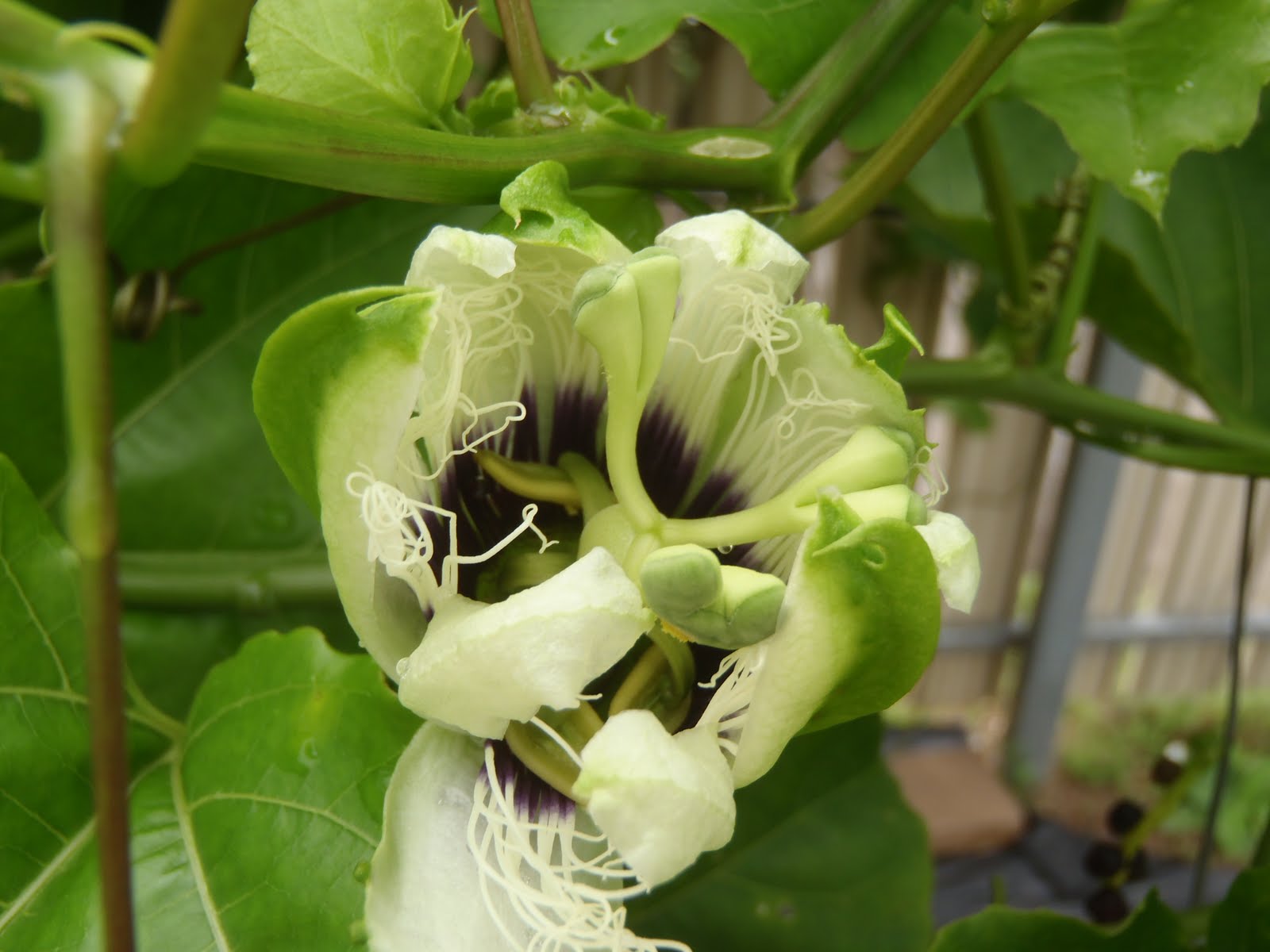
Fortunately the passionfruit vines which I thought had been poisoned by the council's annual weed-killing in the adjoining laneway haven't been much affected. They are both in full fruit and give off about one fruit per week.

Sunday, April 17, 2011

Bucket University

Almost all the green tree frog tadpoles have grown into froglets and "graduated" from the plastic bucket they called home, to the big wide world. All except for one. We've had the tadpoles since early February. They have survived a mini cyclone, my initial experiments in feeding them, plagues of mosquito larvae and visits from a neighbour's inquisitive cat.


The thought that tree frog tadpoles consume mosquito larvae is a myth. I have witnessed many a tadpole surface for air right near mosquito larvae and completely ignored them. The fact that these larvae developed in multitude to latter stages also proves the lack of interference from tadpoles.


Contrary to popular belief, green tree frog tadpoles also don't eat each other. The dead tadpoles I found (two in total) bobbed on the surface unmolested and intact. What caused their deaths, I know not, but I assure the reader there was plenty of water and food.


Green tree frog tadpoles are definitely herbivores. Once developed however, grown frogs eat insects and spiders, smaller frogs and even small mammals.


Here's an example of a 'graduate frog' in the backyard (note the tail):

Thursday, April 14, 2011

Going Bananas!

Looking out from an upstairs window this morning, my boyfriend remarked "What the heck is that on my banana?" We were both in the bathroom at the time, so it could have led to all sorts of smart comments. However, we both ran excitedly downstairs to investigate the bigger of the two banana trees in the backyard.


Upon a closer look, we found that the banana tree was starting to form the beginnings of a BUNCH of bananas! Having never seen how these actually take shape, I was naturally intrigued. I have seen fully developed bunches, replete with pendulous purple hearts, but never one in its infancy. Here's a picture...


I'd also fertilised and mulched the banana trees the day before, so I thought it was a bit cheeky that my partner could call them his bananas! But fair enough, he had bought and planted them as young plants, so they could be seen as his banana trees.


On a side note, due to the cyclones which have devastated banana-growing regions of Australia, the prices of bananas have quadrupled. Usually around $3 p/kg, bananas can now cost as much as $12 p/kg in supermarkets.


So we're definitely looking forward to the day when these beauties ripen into yellow, golden goodness which we can munch on! Definitely worth their weight in gold at the moment.

Saturday, April 2, 2011

First Taste!

We finally tasted our first home-grown passionfruit this morning!

My boyfriend found two ripened passionfruits which had fallen off the vine. One was perfectly juicy and sweet. However, the other had started to rot a little.. very disappointing.

At least now we know when to pick them off before they're over ripe. I have been eyeing the passionfruit for weeks now, but have resisted temptation so far. Who knew my patience would outlast the ripening process? We've had a LOT of rain lately too, which may have helped the rot factor.

MMMmmmm.. I know of at least 3 other passionfruit ripe for the picking!!

The colour of ripened Panama Red is a dull pink. You can wait until it becomes a more brilliant shade of red, but that runs the risk of other critters (which also LOVE passionfruit!) eating it before you do.

Yellow means the fruit isn't quite ready yet, just halfway. And green is definitely NOT ripe.